About
A French company, based in Montpellier · hosted in the EU
forevr is a digital memorial platform. A family creates a memorial in someone's name — their photos, their voice, their story, the tributes of the people who knew them — and ties it back to the real world with QR codes, placed wherever the memory needs something to hold on to.
Our mission
To bring together in one place what is left of a person — their photos, their voice, their story, the words of the people who knew them — to let a whole family add to it, and to make sure that place can be found again. That's what the QR code on an urn or a grave is for: it ties the memory to a real place, the one people already go to.
The second half of the mission is a harder promise: lasting. A memorial is only worth anything if it's still there in twenty years — and that decides almost everything else, starting with the absence of a subscription.
Why forevr exists
What's left of a person doesn't vanish all at once: it scatters. The photos sit on three phones that don't talk to each other, the messages of sympathy sink into old conversations, the book signed on the day of the funeral ends up in a box, and the recordings where you can hear their voice become impossible to find. At the time nobody thinks about it — there's plenty else to do. You notice a year later, when someone asks “do you remember what their colleague said?” and nobody has the answer.
The answers that existed didn't fix that. Online memorials are paid for by subscription, and a subscription always stops in the end — a card that expires, a bank that declines, nobody left watching a direct debit in a dead person's name. That's the worst possible failure for a promise about memory: disappearing at the exact moment nobody is looking. A grave, by contrast, holds up over time — but it only says two dates and a name.
forevr came out of that gap. One payment, because there's nothing to renew and nothing to forget. A memorial created with no account, because you don't ask a family to choose a password on the day of the funeral. And a QR code to place where they already come to remember — an urn, a plaque, a picture frame — so that the place can be found again without having to find a link.
What I set out to avoid was another product. A memorial is only worth anything if it's still there in twenty years, and that promise commits more than a feature does. It's the one thing I won't compromise on.
Julien Wiegandt, founder of forevr
Our story
May 2026
The first lines of code
The project starts. The original idea fits in one sentence: tie a grave to what remains of a life, with a code you scan.
Summer 2026
A first model, through funeral directors
forevr is first built to be sold by funeral directors: a professional portal, a prepaid wallet, and a personalised plaque made to order for each family.
August 2026
That model is dropped
Two findings. The made-to-order plaque never reached the print quality we wanted — making a unique object per order is a printer's trade, not ours. And going through a middleman kept the service away from the people it exists for: families, who decide in the hours after a death.
The professional portal, the prepaid wallet and the plaque all go. The sticker becomes a QR code printed in batches in advance, and the memorial is created directly by the family, with no account, in a few minutes.
Today
A service in production
forevr is live with its first users, one payment and no subscription. Development carries on at the pace of what families ask for.
The team

Julien
Product & engineering
Designs and builds the service, from the memorial editor to the print template for the QR codes.
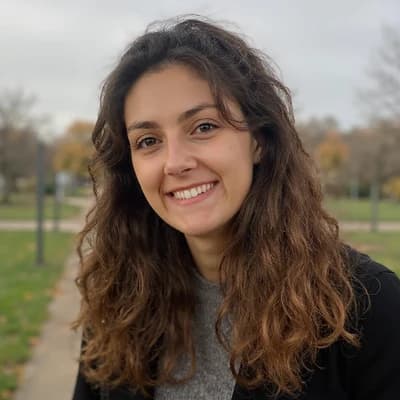
Célia
Family support
Answers the chat, helps create a memorial when the tool or the words get in the way, and reads over everything published in Resources.
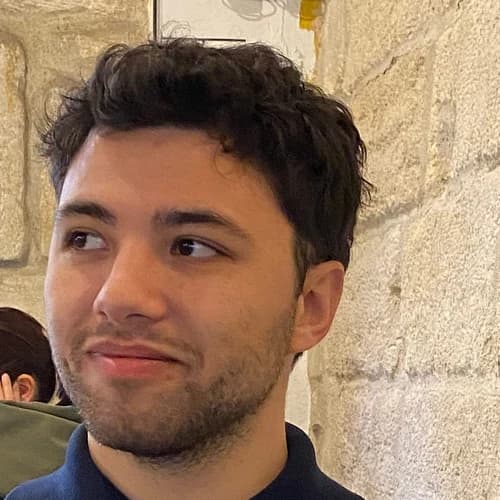
Lucas
Operations & shipping
Orders the sheets of QR codes, prepares every parcel and gets it out within one business day.
In a few numbers
- 12partners in France
- Local funeral directors who offer forevr to the families they look after.
- €0a year
- No subscription, no recurring charge. A memorial is paid for once, and nothing is taken afterwards.
- 10–30years guaranteed
- Depending on the plan, free replacement included: a damaged QR code is replaced — it doesn't have to last.
- 3QR codes per memorial
- A family rarely has just one place to remember. The three stickers are identical and go wherever you want them.
- 14days to decide
- The memorial is live and shareable from the moment it's created. Choosing a plan comes later, with no account to set up.
Families who came through our partners have given them 29 ratings of 5/5 after their order.
What forevr commits to
One payment, not a subscription
A memorial is paid for once. No yearly charge, no renewal to remember. That's the fundamental difference with services that bill for hosting every year — and close the memorial when a payment fails, often years later, when nobody is watching the card on file any more.
The memories belong to the families
The photos, the voices, the videos and the tributes people add stay the property of the people who added them. They are never sold, and never used for anything but the service itself.
The physical sticker is guaranteed and replaced
The QR codes we send are guaranteed for 10 to 30 years depending on the plan, free replacement included. A sticker left out in the weather eventually suffers: the promise isn't that it lasts, it's that we replace it.
You can create one without an account
A memorial is created and shared with no sign-up. Asking a family to choose a password in the hours after a death makes no sense; the account only comes after payment, so the memorial can be found again from another device.
The company
forevr is operated by JWDT LABS, a French simplified joint-stock company registered with the Montpellier Trade and Companies Register. The registered office, the company number and the hosting providers are listed in the legal notice.
A question, a remark, a problem with a memorial: the chat is open on every page of the site, and a contact address is in the legal notice.