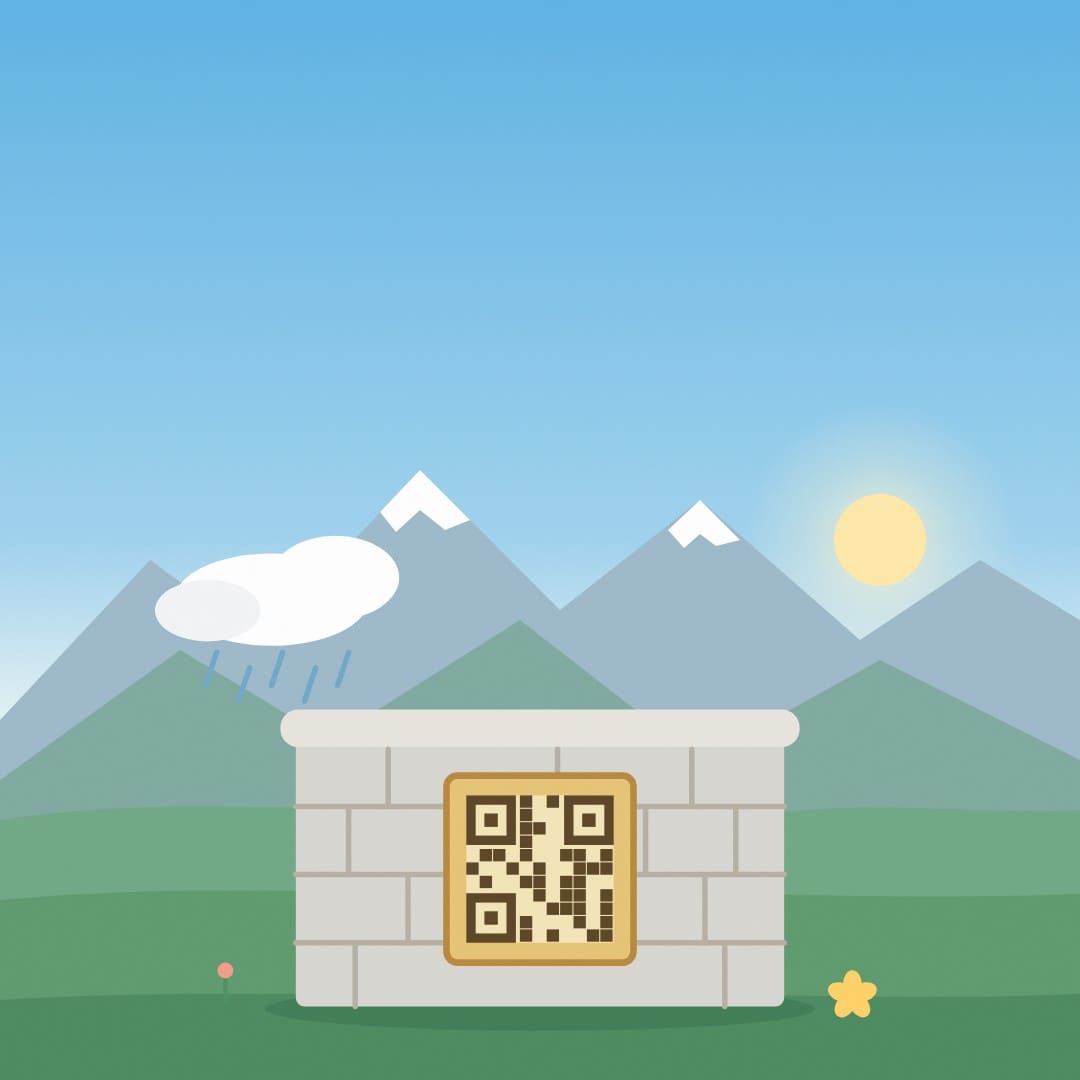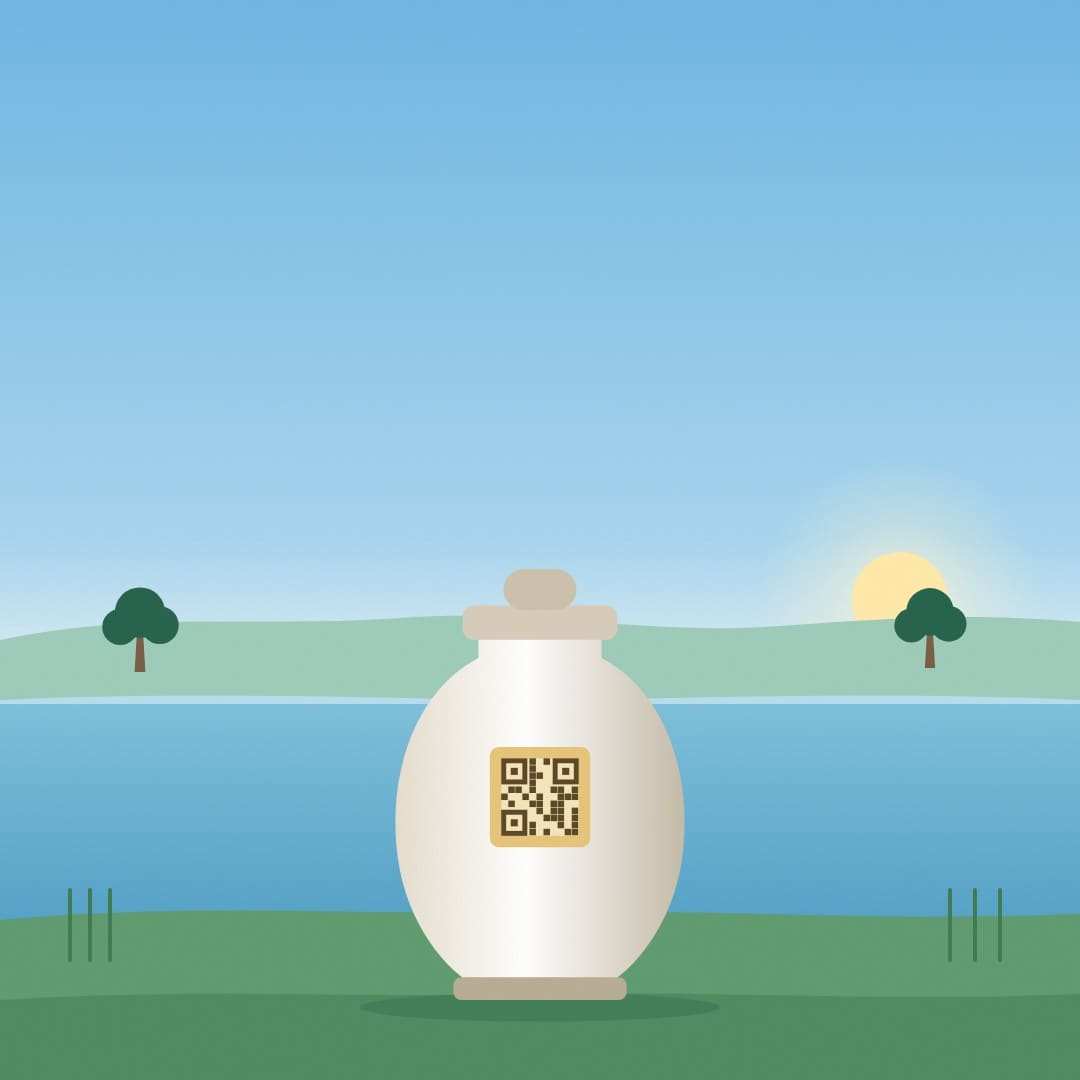
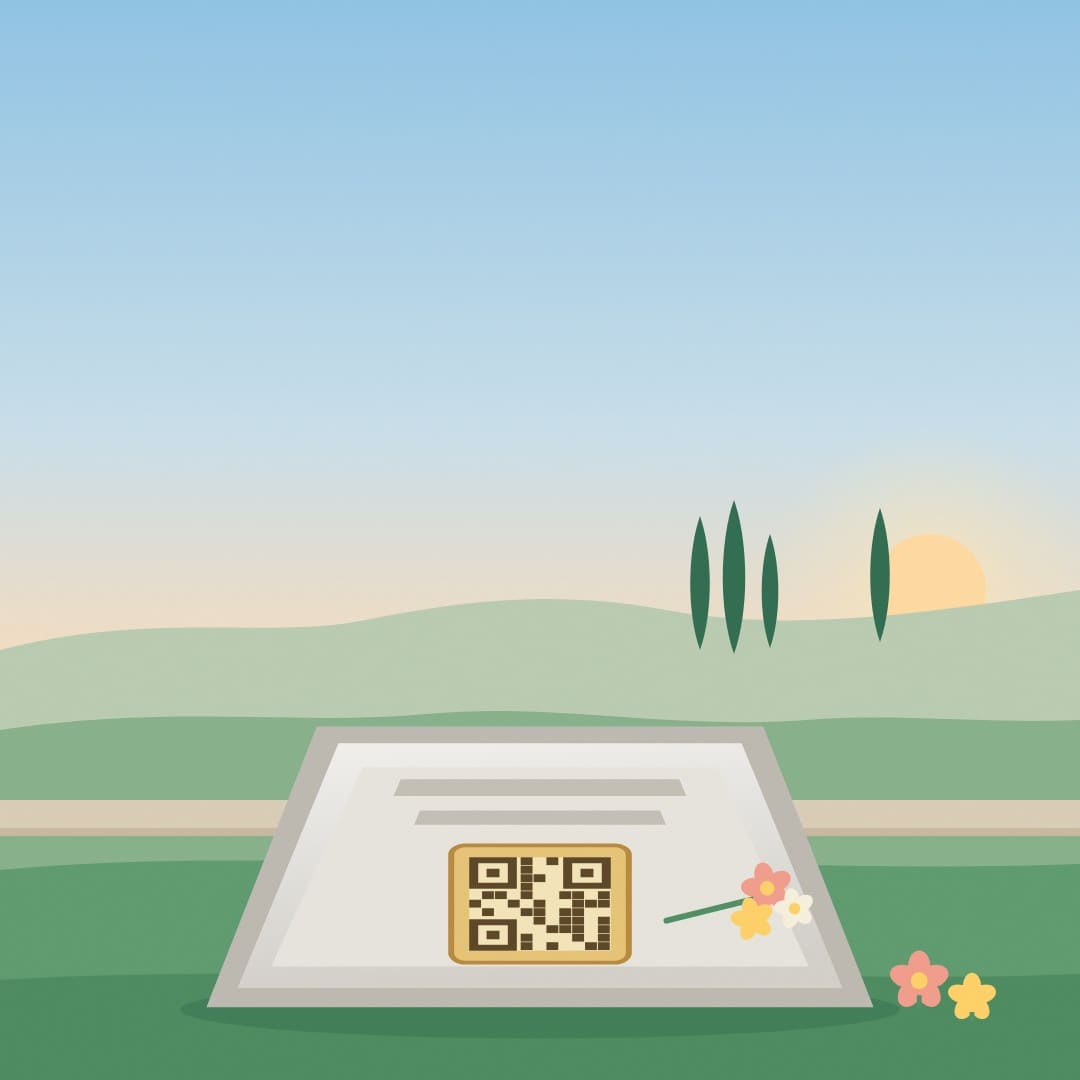
A QR code on a headstone is a small square, usually between one and two inches, fixed to the stone or to its frame. It opens a page about the person buried there.
Two decisions to make before you order anything: who you ask, and what it is made of.
Ask the cemetery first
This is the step that is easy to skip, and the only one that can cost you money twice.
Cemetery rules are local. In some places anything fixed to the stone is a matter for the family alone. In others, every alteration to a monument needs the approval of the cemetery office, the parish, or the local authority — and that includes something stuck to it. Churchyards tend to be stricter than municipal cemeteries, and rules for a shared plot differ again.
One phone call settles it. Ask specifically whether a small adhesive plaque is permitted on the stone or the surround, and whether anything needs to be in writing.
Where to fix it
Three spots, in order of how well they work.
The base or the plinth. Low, out of the line of sight from a few feet away, and easy to reach with a phone. Found by anyone looking for it, unnoticed by anyone who isn't.
The frame or the surround. Where there is a kerb, the inside face works well: the code is protected from direct weather and is not on the stone itself, which often settles the permission question too.
The face of the stone. Visible, and more exposed. Better suited to an engraved code than to a sticker, and worth thinking about twice — a headstone is composed, and a square in the wrong place is the thing your eye goes to.
What survives outdoors
Not everything does. A code printed on paper laminate fades, and on a stone that gets afternoon sun it fades fastest.
What matters is the material, not the design: the code should be printed on or under a UV-stable surface, and the adhesive should be rated for outdoor stone. Ask what happens if it fails — a service that will replace it without argument is telling you it expects to.
Sticker or engraving
Both work. The real difference is that one is reversible.
An engraving is permanent and looks like part of the monument; a monumental mason can cut it into the stone. It also locks you to whatever service is behind the code: if that company disappears, you are left with a square cut into granite that leads nowhere.
A sticker can be lifted off and replaced. On a memorial that is meant to last decades, being able to change your mind is worth more than most families expect.
On an urn it behaves differently — a QR code on an urn explains why. How it is fixed is engraved or sticker, how long it survives outdoors is how long an outdoor code lasts, and what a visitor sees is what happens when you scan. Prices in what a memorial QR code costs; the main guide for what it is all for.